Christian apologists often give three proofs of the resurrection: the empty tomb, the Biblical accounts of the resurrection and the behaviour of the disciples before and after. I have discussed the empty tomb and the appearance narratives in previous posts. This one will examine the third claim, which centres around the disciples’ response to events.
THE CLAIM
A typical example can be found on the Christian Broadcasting Network website: “Perhaps the greatest change caused by the resurrection was in the character of the disciples. They had previously been timid, afraid, and depressed after witnessing the arrest and suffering of Jesus. But after His resurrection they became aggressive, bold, and full of joy.” [i]
A second part of the claim is the fact that the disciples endured persecution and ultimately died for their faith in Christ resurrected: “People don’t die for what they know is a lie.”[ii]
THE EVIDENCE
Our sources are neither unbiased nor are they eyewitness accounts.[iii] They are the four canonical gospels and The Acts of the Apostles, written by author of Luke’s gospel.
Two gospels state that the disciples fled when Jesus was arrested.[iv] Peter, apparently, showed more courage. John says he attacked the high priest’s servant with a sword (the other gospels mention the incident but don’t ascribe it to Peter).[v]
All four gospels say he then followed Jesus to the high priest’s house. This is the subject of debate among scholars; some regard Peter’s presence[vi] and the gospel accounts of Jesus’ trial[vii] as credible. Bart Ehrman, on the other hand, dismisses both, saying early Christians could not possibly have known what happened at Jesus’ trial since they weren’t there and the authorities were hardly likely to have told them.[viii]
In all four gospels, the male disciples kept their heads down and stayed away from the crucifixion. With the possible exception of Thomas, they all stayed together in Jerusalem, and it was there, according to Mark, Luke, John and Acts, that Jesus appeared to them. Matthew, however, only reports him appearing to the male disciples in Galilee.
After this, they set out to proselytise, and the extraordinary story of the growth of Christianity began.
PERSECUTION
The fact that the disciples braved persecution and died for their faith is often cited as evidence for the resurrection. But how much persecution did they actually suffer? It is difficult to say, since our best source, Acts, is today widely regarded as more schematic than historical.[ix] The first martyr appears to have been Stephen, a Greek-speaking Jew, who was stoned for blasphemy just a few years after the crucifixion. A decade later, James son of Zebedee was apparently the first disciple to die, executed on the orders of Herod Agrippa.
Around 62-64 CE, James the brother of Jesus was stoned to death. According to Josephus, this was ordered by a particularly hot-blooded high priest, who lost his job as a result.[x] Christian tradition has it that Peter and Paul were executed in Rome in 64 CE, as part of a persecution Nero unleashed in the aftermath of the great fire. This is attested in a letter written over 30 years later by Pope Clement 1. Some scholars[xi] regard this as credible evidence, but others[xii] are more sceptical.
NO REAL EVIDENCE
As for the rest of the disciples, we have no real evidence about what happened to them. In Christian tradition, all but one ended up martyred in places as diverse as India, Armenia, Egypt and Ethiopia, but in many cases, our earliest sources date from as late as the third or fourth century and are unlikely to be reliable. Simon the Zealot, for example, was executed in what is now Georgia, sawn in half in Persia and crucified in both Samaria and Britain. He is also said to have died of natural causes in Edessa. And Bartholomew was allegedly flayed, crucified, killed with arrows, drowned and burned at the stake.[xiii]
Take your pick!
SPORADIC PERSECUTION
The picture painted in Acts suggests that the persecution of the very early church was localised, sporadic and for the most part of a relatively low intensity. Paul seems to have sown discord in the synagogues he visited, which might have made the local authorities regard him as a troublemaker and have him locked up or flogged and thrown out of town.
WHAT DO WE KNOW FOR SURE?
The fact is that we don’t really know how the disciples responded to Jesus’ execution. All we can do is reconstruct events using best guesses and a critical assessment of the Biblical texts.
Is it credible that the disciples fled when Jesus was arrested? That they were frightened and distraught? That they stayed together in Jerusalem? That the male disciples kept their heads down and sent Mary Magdalene and other female followers out to see if it was safe for them to show their faces?
Personally, I think the answer is yes.
And is it credible that, for whatever reason, most or all of them regained their nerve and decided to stick together and continue Jesus’ mission without him?
It is clear that the answer to this question is yes.
And that is probably as close to knowing what happened as we are ever likely to get.
WHY DIDN’T THEY GIVE UP AND GO HOME?
How can we explain this recovery of nerve and renewal of faith? The traditional Christian explanation is that Jesus came back from the dead, appeared to them and gave them the courage to spread the word.
But there is a different explanation that draws on the work of social psychologist Leon Festinger.
FESTINGER’S HYPOTHESIS
Writing in 1956 (hence the sexist language), Festinger said: “Suppose an individual believes something with his whole heart; suppose further that he has a commitment to this belief, that he has taken irrevocable actions because of it; finally, suppose that he is presented with evidence, unequivocal and undeniable evidence, that his belief is wrong: what will happen? The individual will frequently emerge, not only unshaken, but even more convinced of the truth of his beliefs than ever before. Indeed, he may even show a new fervor about convincing and converting other people to his view.”[xiv]
Festinger and his colleagues devised a five-point hypothesis, based on their study of past millennial movements, including the 16th century Anabaptists, Sabbatai Zevi in the 1660s and the Millerites in 1840s America.
- A belief must be held with deep conviction and it must have some relevance to…what the believer does or how he behaves.
- The person holding the belief must have committed himself to it; that is, for the sake of his belief, he must have taken some important action that is difficult to undo. In general, the more important such actions are, and the more difficult they are to undo, the greater is the individual’s commitment to the belief.
- The belief must be sufficiently specific and sufficiently concerned with the real world so that events may unequivocally refute the belief.
- Such undeniable disconfirmatory evidence must occur and must be recognized by the individual holding the belief.
- The individual believer must have social support. It is unlikely that one isolated believer could withstand the kind of dis-confirming evidence we have specified. If, however, the believer is a member of a group of convinced persons who can support one another, we would expect the belief to be maintained and the believers to attempt to proselyte or to persuade nonmembers that the belief is correct.[xv]
TESTING THE HYPOTHESIS
Festinger wanted to test his hypothesis by observing a contemporary religious group who believed that the world was about to end and cataloguing their reactions when it failed to do so. Eventually, he found what he needed: a small UFO cult centred around Chicago housewife Dorothy Martin, who predicted that a giant tsunami would flood most of North America on 21st December 1954, but she and her followers would be saved by flying saucers from the planet Clarion.
Festinger and a number of colleagues infiltrated Martin’s group. They learned that some of her followers had given up or lost their jobs as a result of their beliefs; others had dropped out of college or given away or sold all their possessions.
THE END IS NIGH
As the great day approached, Dorothy Martin and others made a number of predictions about encounters with aliens and flying saucers, none of which came to pass. But, Festinger and his colleagues noticed that each of these disconfirmations made Martin’s followers more, not less, convinced and keener than ever to proselytise.
THE DAY AFTER
When nothing happened on December 21st, they were all deeply shaken. Dorothy Martin herself was in tears. “Floundering, increasingly disoriented as prediction after prediction failed, they cast about for clues, watching television for orders, recording phone calls the better to search for coded messages, pleading with spacemen to do their duty — all in a desperate attempt to discover a clearly defined next step on the path to salvation by saucer.”[xvi]
But then Dorothy Martin received a message from Planet Clarion: God had heard their prayers and recognised their goodness, and as a result, he had decided not to send a tsunami to flood North America.
“This message was received with enthusiasm by the group. It was an adequate, even an elegant, explanation of the disconfirmation. The cataclysm had been called off. The little group, sitting all night long, had spread so much light that God had saved the world from destruction.”[xvii]
Not everyone kept the faith, but as Festinger had predicted, those who had sacrificed most tended to stay. Crucially, social support from other believers also made continued adherence to the cult more likely. Those who were more isolated were more liable to drop out.
WHAT HAS THIS GOT TO DO WITH CHRISTIANITY?
In their book, When Prophecy Fails, Festinger and his colleagues asked whether his thesis applied to the disciples after the crucifixion of Jesus. It would appear that three criteria were met:
1. Deep conviction
2. The disciples had upended their lives in order to follow Jesus
5. Social support (if the disciples stayed together)
But a question mark hovers over the third and fourth criteria.
3. A definite prediction that something is going to happen
4. A clear disconfirming event where the prediction is seen not to come true
Festinger notes that the gospels are peppered with passages in which Jesus predicts his own death.[xviii] If these passages are authentic, then the crucifixion wasn’t a disconfirming event but a confirmation of predictions made by Jesus, so Festinger’s hypothesis doesn’t apply.
DID JESUS PREDICT HIS OWN DEATH?
Geza Vermes, who, during his lifetime was widely regarded as one of the world’s greatest experts on the origins of Christianity,[xix] says that Jesus didn’t predict his death and those New Testament passages where he does so are not authentic. He argues that a critical reading of the gospels makes it clear that both Jesus and his disciples expected his ministry to climax in the inauguration of the Kingdom of Heaven.[xx]
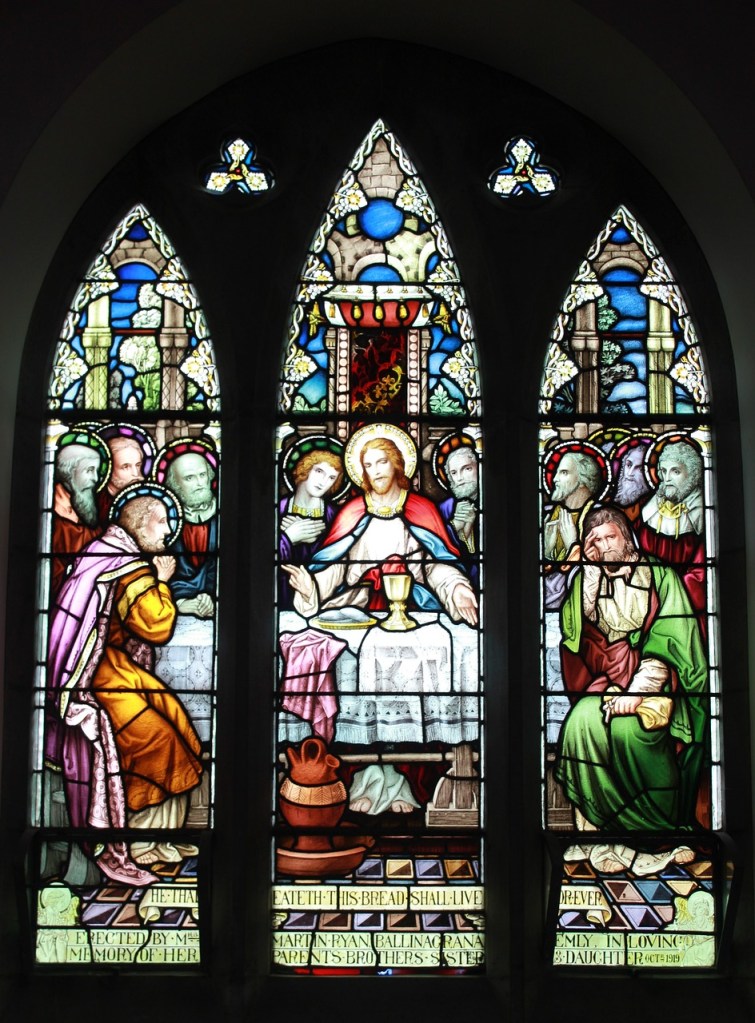
He also says that 1 Corinthians 11:23-25 makes it clear that even the story of the last supper is inauthentic. The Eucharist owes its genesis to Paul, not pre-Pauline tradition. [xxi]
23 For I received from the Lord what I also passed on to you: The Lord Jesus, on the night he was betrayed, took bread, 24 and when he had given thanks, he broke it and said, “This is my body, which is for you; do this in remembrance of me.” 25 In the same way, after supper he took the cup, saying, “This cup is the new covenant in my blood; do this, whenever you drink it, in remembrance of me.” (My emphasis – PC.)
In other words, the story of the last supper isn’t something that Paul learned from Peter, James or the Jerusalem church. He claimed he learned it from Jesus himself.
IF VERMES IS CORRECT
If Vermes is right then the third and fourth criteria of Festinger’s hypothesis apply. The arrest and crucifixion of Jesus represented a massive and brutal disconfirmation of the disciples’ expectation that the Kingdom of Heaven would arrive to crown Jesus’ earthly mission.
Imagine these people, who believed in Jesus so passionately that they had left their former lives and families behind to follow him. They must have been completely discombobulated when events shattered their expectations. We can picture them distraught, frightened, unable to comprehend, like Dorothy Martin’s followers when the UFOs and tsunami failed to appear on 21st December. They would have been floundering, desperately searching for something that would enable them to cling onto their faith.
But, crucially, they stayed together and gave each other social support.
WAS SOCIAL SUPPORT ENOUGH?
At this distance, we simply don’t know. Maybe the social support they gave each other was enough to keep them going. Or, like Dorothy Martin’s followers, did they find something else to sustain them?
It is possible (but by no means probable) that they found Jesus’ tomb empty.[xxii] Perhaps they reinterpreted something he had said. Or, if their number included someone with enough education, they might have located a passage in scripture (maybe Isaiah 53:3-7, Psalm 22:16-18 or Daniel 9:25-26) that they could reconfigure as a prediction of Jesus’ death.
Or perhaps one or more of them suffered something akin to a bereavement hallucination, which they interpreted as a resurrection event.[xxiii]
Whether it was because of social support or something else, the disciples found renewed hope and became convinced they had been right all along. And so it was that the crucifixion, a horrendous disconfirming event that should have shattered their faith in Jesus, ended up strengthening it and giving them the courage to start again.
NO NEED FOR THE SUPERNATURAL
We cannot know whether events actually transpired as I have suggested. The facts are lost in the mists of time and buried under layers of propaganda and myth. The brilliant insights of today’s scholars may be trashed by their successors. But I would suggest that here we have a plausible explanation for the way the disciples behaved after the crucifixion, and one that doesn’t require any help from the supernatural.
For this reason, their actions cannot be said to constitute evidence for the resurrection.

If you have enjoyed this blog post, you may enjoy my novel The Omega Course, which uses fiction to explore the origins of Christianity and the Bible. Click here for details.
[i] https://www2.cbn.com/article/salvation/resurrection-proof-disciples-sacrifice (accessed 10/09/2024)/
[ii] https://www.momentsofhopechurch.org/post/proofs-of-the-resurrection-people-don-t-die-for-what-they-know-is-a-lie (accessed 11/09/2024).
[iii] For the authorship of the gospels, see https://www.bartehrman.com/who-wrote-the-gospels/ (accessed 10/09/2024).
[iv] Matthew 26:56, Mark 14:50.
[v] John 18:10, Matthew 26:51, Mark 14:47, Luke 22:50.
[vi] See, for example Lane Fox, Robert: The Unauthorised Version: Truth and Fiction in the Bible, London, Viking 1991, p. 288.
[vii] Sanders, EP: The Historical Figure of Jesus, Penguin Books, London 1995, pp. 269-273.
[viii] Ehrman, Bart, Did Jesus Did Jesus Exist? The Historical Argument for Jesus of Nazareth (Kindle Edition), HarperOne, 2012, Loc 4863.
[ix] Martin, Dale B, New Testament History and Literature (The Open Yale Courses Series) Kindle Edition. Yale University Press, 2012, Loc 2665.
[x] Antiquities, Book 20, Chapter 9.
[xi] For example Vermes, Geza, Christian Beginnings: From Nazareth to Nicaea, AD 30-325 (Kindle Edition). London, Penguin Books, 2012, Loc 2582.
[xii] For example Martin, New Testament History and Literature,Loc 178.
[xiii] I have to confess that my source for Simon the Zealot is Wikipedia: https://en.wikipedia.org/wiki/Simon_the_Zealot (accessed 10/09/2024). For Bartholomew see the interview with Sean McDowell, a Christian who completed a PhD on the fates of the apostles https://www.youtube.com/watch?app=desktop&v=nIBrHrqZdTM (accessed 21/04/2025).
[xiv] Festinger, Leon; Riecken, Henry W.; Schachter, Stanley. When Prophecy Fails: A Social and Psychological Study of a Modern Group that Predicted the Destruction of the World (Kindle Edition). Wilder Publications, 1956, Loc 69.
[xv] Op cit, Loc 77.
[xvi] Op cit, Loc 3745.
[xvii] Op cit, Loc 2936.
[xviii] Op cit, Loc 480.
[xix] Guardian obituary, 14 May 2013.
[xx] Vermes, Geza, The Authentic Gospel of Jesus, Penguin Books, London, 2004, pp. 380-388.
[xxi] Op cit, pp. 301-307.
[xxii] See https://paulclark42.com/2024/06/25/empty-tomb/ for my take on the question.
[xxiii] Rees, WD: The hallucinations of widowhood. British Medical Journal, 4, 37-41, 1971; Sagan, Carl, The Demon-Haunted World: Science as a Candle in the Dark. Headline Book Publishing, London 1997, p. 99; Ehrman, Bart D How Jesus Became God How Jesus became God: the exaltation of a Jewish preacher from Galilee (Kindle Edition), HarperOne 2014, Loc 2884-2925.
 Paul Clark
2 responses to “Are the Actions of the Disciples Evidence for the Resurrection?”
[…] on the links to see my take on the empty tomb and the response of the disciples to Jesus’ […]
[…] [xxxiv] https://paulclark42.com/2024/06/25/empty-tomb/, https://paulclark42.com/2024/07/22/the-resurrection/ and https://paulclark42.com/2024/09/11/disciples/. […]