
Christian apologists often claim that morality can only come from God. Without God, there is no morality, and the fact that morality exists proves that God exists.
A FAMILY OF ARGUMENTS
This isn’t a single argument but a family of arguments that theologians and philosophers have developed over the centuries. They tend not to see these arguments as proof but simply as evidence that points to God’s probable existence.[i]
One such argument was developed by Thomas Aquinas in the 13th century. He said that if we say something can be better (or more moral), we must be comparing it to an absolute standard, and the best explanation for the existence of these standards is God. This argument is rejected by most philosophers today, since it relies on outdated Platonist and Aristotelian assumptions about forms.[ii]
THE HIGHEST GOOD
In similar vein, some 500 years later, Immanuel Kant argued that a rational and moral being must desire “the highest good”: a world in which people are both moral and happy. The fact that we can desire this suggests that it must be possible. However, since there is precious little sign of such perfection in this world, Kant argued that this implies that there is probably an afterlife where the highest good does exist, which in turn implies the existence of God.[iii]
BECAUSE GOD COMMANDS IT
Divine command theory goes back as far as Augustine of Hippo in the 4th century, and variations on the theme continue to be developed. Essentially the argument is this: just as earthly laws are enacted by earthly lawgivers (governments and legislatures), moral laws are laid down by a divine lawgiver. The fact that we are aware of moral laws such as “Do not lie” and “Keep your promises” shows that we are indirectly aware of God.
Proponents of divine command theory insist that moral laws are objective, and propose something like this:
- There are objective moral obligations.
- The existence of God provides the best explanation for these objective moral obligations.
- Therefore, God probably exists.[iv]
(Apologists tend to repeat less nuanced versions of this proposition. Where these apologists also take their Bible literally, this leads to the absurd contention that the massacres, genocides and ethnic cleansing described in the “historical” books of the Old Testament were perfectly justified.[v])
THE ARGUMENT FROM MORAL KNOWLEDGE
In the 19th century, John Stuart Mill claimed that moral obligations begin within us through our conscience, without any need for God. Theists counter by asking how our conscience can know what is good. For philosopher Richard Swinburne, the fact that it does is itself evidence for God’s existence (though he doesn’t claim that it is proof).
To the objection that perhaps moral knowledge is an evolutionary adaptation (see below), Swinburne asserts that moral beliefs are not a necessary adaptation. Erik Widenburg adds that if evolution is the source of our morality, this too is evidence for God, since it would require an extraordinary amount of luck for blind evolution to come up with the “right” morals. He says this morality must be objective, since anything less would lack authority.[vi]
THE ARGUMENT FROM HUMAN DIGNITY OR WORTH
The proposition is this:
- Human beings have a special kind of intrinsic value we call dignity.
- The best explanation for this dignity is that we are created in God’s own image.
- Therefore, there is probably a supremely good God. [vii]
(Note again the room for doubt philosophers leave, something forgotten by pound-shop apologists.)
This argument goes all the way back to Genesis 1:27: “God created mankind in his own image…”. It also harks back to Immanuel Kant’s insistence that human beings must always be seen as an end in themselves, not a means to an end. And it is this dignity that is the foundation for human rights.[viii]
But the atheist can ask whether this dignity is something objective out there in the world, or merely something we humans extend to each other. Presumably the mosquitoes that plague us in the tropics aren’t aware of it.
CONSEQUENCES
Since time immemorial, there have been philosophers who have examined ethical questions without recourse to God or gods. Most modern secular moral philosophy has been consequentialist: the important question when it comes to the morality of an action is its consequences.
The most common variety is utilitarianism, which was developed in the 19th century by Jeremy Bentham and John Stuart Mill. They argued that the aim of any moral act must be the greatest happiness of the greatest number. Sam Harris claims that through utilitarianism, it is possible to arrive at a truly scientific approach to morality.[ix]
However, utilitarianism is subject to fierce criticisms. Some argue that it falls foul of David Hume’s “is-ought problem” (you cannot base a value judgement on a factual statement). Others ask how you can quantify happiness. Still others remind us that we often can’t know in advance what the consequences of an action will be.
It can also be argued that utilitarianism makes too many demands on us and ignores our special obligations. Imagine that a raging torrent is sweeping people away and you have a choice: you can either save your mother or two complete strangers. The strict utilitarian would abandon their mother, but I think most of us wouldn’t hesitate to rescue her instead.
THE DEATH OF GOD
Historian Tom Holland (a pro-Christian agnostic) points to atheist philosopher Friedrich Nietzsche, who said that with the death of God, we also lose Christian morality. The strong no longer need to be humble or to shelter the weak and the meek. The clever no longer need to help the stupid. And for Nietzsche, this is a good thing, because it liberates the strong, the powerful and the intelligent, for it is only by releasing their dynamism that the human race can progress.[x]
Many Christian writers will praise Nietzsche for his intellectual honesty, for pointing out the amoral quagmire which, they claim, awaits if we abandon God.[xi]
A HUMANISTIC APPROACH
Modern humanists do not accept this. They reject moral relativism and insist that there is such a thing as moral truth (a.k.a. objective morality).[xii] They concede that moral questions are difficult and all we can do is keep asking what is the right thing to do. Our ethics have to be human-centred and must try to find the answer that is best for everyone, and we mustn’t be afraid to doubt our answers. Humanists (like most religions) point to the golden rule: “Treat others as you would want them to treat you.”
From this, Tom Holland argues that humanism is merely a form of Protestantism that has declared God to be dead.[xiii] Because if objective morality exists, where does it come from, if not from God?
The humanist could counter that the flourishing of human beings is an end in itself: “logic cannot regress infinitely; we must start with a set of basic principles that are unprovable but self-evident…”.[xiv]
Atheist thinker Ayn Rand concurred. For her, “life is the only phenomenon that is an end in itself” and consequently, “The standard of value of the ethics…is man’s life, or: that which is required for man’s survival qua man.”[xv] Her arch-individualist conclusions, however, were very different from the more empathetic, compassionate and community-minded ethos of humanism.
EMOTION
One intriguing answer is that the roots of morality aren’t objective. Human morality doesn’t come from God and it isn’t based on reason. Instead, human morality is based on emotion.
The emotions that underlie our morality have been hardwired into us by evolution. They are nature’s way of controlling our behaviour. Most of our decision making relies on them[xvi] and they are key to our success as social animals.[xvii]
Frans de Vaal, who has spent some 50 years studying primates, says that chimpanzees have a moral code based on two key emotions: fairness and empathy. In his TED Talk,[xviii] he shows film of the famous experiment in which two capuchin monkeys were asked to perform the same task, but one was given a much better reward than the other. The monkey treated unfairly is furious and throws his inferior reward back at the experimenter.
Among chimpanzees, de Vaal says the sense of fairness is even stronger, and the one given the better reward will often refuse to co-operate in solidarity with the chimp that has been treated unfairly. Human beings are extremely good at spotting unfairness or cheats. Indeed, when people are brain damaged, this ability is one of the last things to go.[xix]
YOU SCRATCH MY BACK…
One important component of chimpanzee fairness is reciprocity, sometimes literally a case of you scratch my back and I’ll scratch yours. Chimps will happily do each other a favour in the expectation that it will be returned later. Dolphin reciprocity is even more complex: one group of male dolphins will help another group secure access to a female, sure in the knowledge that they can call in the favour at some future time.
Empathy is widespread among social mammals, as any dog owner can attest. De Vaal’s TED Talk includes film of chimpanzees making up after a quarrel and consoling the loser in a fight, and he gives details of experiments researchers have devised that demonstrate that chimpanzees genuinely care about other members of their troop.
FIVE KEY EMOTIONS
Moral foundations theory[xx] is an attempt to map out the emotions that underlie human morality. In his book the Righteous Mind,[xxi] Jonathan Haidt suggests five key emotions:
- Empathy
- Fairness
- Loyalty
- Respect for authority
- Disgust
(Haidt doesn’t claim this list is final; proportionality, liberty, honour and ownership have been suggested as possible additions.)
Like the ability to speak a language, these emotions are innate. But just as our language is shaped by the community we are raised in, how these emotions develop depends on our upbringing, the culture we are born into and the ideological positions we adopt.
Our earliest hunter-gatherer ancestors may have had little empathy for those outside their clan or tribe, but as trade brought them into mutually-beneficial contact with others, their circle of concern began to expand. In our highly complex global civilisation, many people extend their empathy to the whole human race and sometimes to animals too, though even the most caring among us will be less concerned by a catastrophic earthquake on another continent than injury to a close friend or relative nearer home.
The racist glories in this parochialism and excludes members of other ethnic groups from their circle of concern, just as the religious bigot excludes those outside their faith community and the communist may exclude those deemed to belong to the wrong social class.
Fairness can be left-wing or right-wing. Do you believe it is wrong that there are billionaires in a world where millions go hungry? Or do you think it’s fair that those who make the biggest contribution receive the biggest rewards?
If a male blue tit is injured, loyalty counts for nothing; his mate will dump him at once and look for another mate.[xxii] Not so human beings, who promise to stick together in sickness and in health. In chimpanzees, loyalty to the troop is expressed in extreme xenophobia. A solitary male found in another troop’s territory will be lucky to escape with his life.[xxiii] People will respond to disloyalty by holding a grudge that can last for years, and treason is widely regarded as an unforgivable crime.
For those with a conservative or authoritarian disposition, respect for authority (be it King, flag, God or the law) is paramount. For liberals, however, it is tempered by the need for liberty, while libertarians tend to be suspicious of all government.
Homophobes will regard same-sex relationships with a disgust that much of the Western world can no longer comprehend. Utilitarian philosophers sometimes go as far as to argue that there is nothing wrong with consensual adult incest if it doesn’t produce children.[xxiv] Most of us, however, primed by disgust, disagree and are happy to support the incest taboo. We might, however, find it difficult to explain the logic behind our opinion.
ALL TOO HUMAN
To say that human morality originates in emotions bequeathed to us by our evolution as social animals isn’t to deny the value of reason and moral philosophy. But it is to admit that human morality is messy and imperfect. We are all prone to inconsistency, hypocrisy, moral blindness and special pleading.
But morality is precious. Without it, we couldn’t maintain any social cohesion and our civilisation would collapse. Throughout human history, religions have played a vital, if flawed, role in codifying and deepening our moral sensibilities.
But in today’s world, fewer and fewer of us are able to believe in the myths that sustain religions. Tom Holland is right to warn that the death of God creates challenges. It leaves us with questions where we once thought we had answers. But it also liberates us, allowing us to escape oppressive ideas encoded in outdated holy texts.
I think Sam Harris is wrong to imagine that we can have a science of morality. Picking our way through the dilemmas thrown up by life will always be an art rather than a science. The question of whether a concern for the flourishing of human beings is an objective truth or a value judgment is perhaps above my philosophical pay grade, but such a concern is certainly a good place to start.
It is right for us to want people to flourish because we are people ourselves and we recognise our common humanity. However flawed it may be in practice, a morality that prioritises empathy, compassion and the flourishing of all will always be superior to one that prioritises authority and hatred towards an “other”, like the depraved ideology of Nazi Germany or the Islamic State, just as it is superior to Nietzsche’s amoral outlook that despises compassion and prioritises the will to power of the elite.
————————————————-
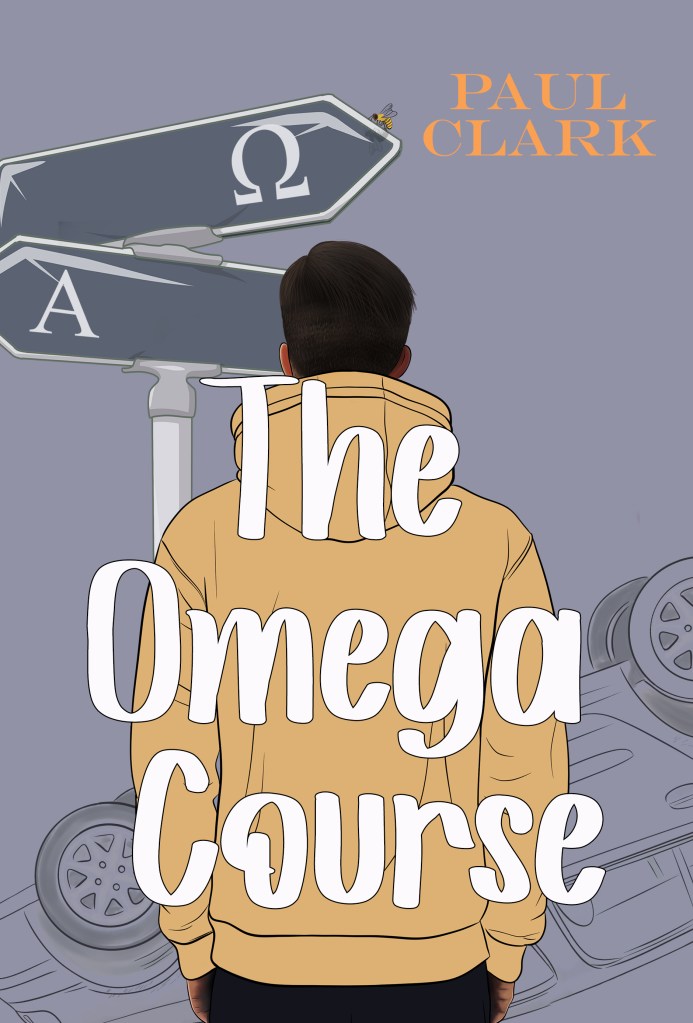
If you have enjoyed this blog post, you may enjoy my novel The Omega Course, which uses fiction to explore the origins of Christianity and the Bible. Click here for details.
[i] Evans, C. Stephen and David Baggett, “Moral Arguments for the Existence of God”, The Stanford Encyclopedia of Philosophy (Winter 2022 Edition), Edward N. Zalta & Uri Nodelman (eds.), URL = <https://plato.stanford.edu/archives/win2022/entries/moral-arguments-god/>. Part 6.
[ii] Evans and Baggett op cit Part 2.
[iii] Evans and Baggett op cit
[iv] Evans and Baggett op cit Part 3.
[v] See for example https://www.youtube.com/watch?v=gdLwNZbDhKA or https://www.youtube.com/watch?v=uSIa9j9Mkt8 (both accessed 27/04/2024).
[vi] This whole section is based on Evans and Baggett op cit Part 4.
[vii] Evans and Baggett op cit Part 5.
[viii] See agnostic historian Tom Holland’s 2022 Theos annual lecture: Humanism: a Christian heresy, https://www.youtube.com/watch?v=bYGQ6FIFLps&t=15s (accessed 27/03/2024).
[ix] Harris, Sam: The Moral Landscape: How Science Can Determine Human Values. Bantam Press, London 2010.
[x] Magee, Bryan, The Great Philosophers: An Introduction to Western Philosophy. Oxford University Press, Oxford, 1987, pp. 242-244.
[xi] See https://www.youtube.com/watch?v=TG8EJ7qkSd4 (accessed 29/04/2024).
[xii] See https://understandinghumanism.org.uk/res_films/moral-relativism/ (accessed 27/04/2024).
[xiii] Holland, op cit. See also Holland, Tom: Dominion: The Making of the Western Mind (Kindle Edition), Little, Brown Book Group, 2019, Loc 9067.
[xiv] Tiger, Steven. Doctrine Impossible: A Journey from Dogmatic Religiosity to Rational Spirituality 3rd Ed (Kindle Edition), 2020, Loc 3489.
[xv] Rand, Ayn, The Objectivist Ethics 1961 https://courses.aynrand.org/works/the-objectivist-ethics/?nab=1 (accessed 20/10/2024).
[xvi] Ridley, , Matt. The Origins of Virtue: Human Instincts and the Evolution of Cooperation, Penguin Books, London, 1988, pp. 143-4.
[xvii] Wilson, Edward O. The Meaning of Human Existence (Kindle Edition), Liveright Publishing, New York, 2014, Loc 195; Ridley, op cit p. 133.
[xviii] See https://www.youtube.com/watch?v=GcJxRqTs5nk (accessed 27/04/2024).
[xix] Ridley, op cit, pp. 129-130.
[xx] See https://moralfoundations.org/ (accessed 24/04.2024).
[xxi] Haidt, Jonathan: The Righteous Mind: Why Good People are Divided by Politics and Religion. Penguin Books, London, 2013.
[xxii] Ridley, op cit p. 135.
[xxiii] Ridley, op cit, p. 163.
[xxiv] https://www.project-syndicate.org/commentary/should-adult-sibling-incest-be-a-crime-by-peter-singer-2014-10

 Paul Clark
Leave a comment